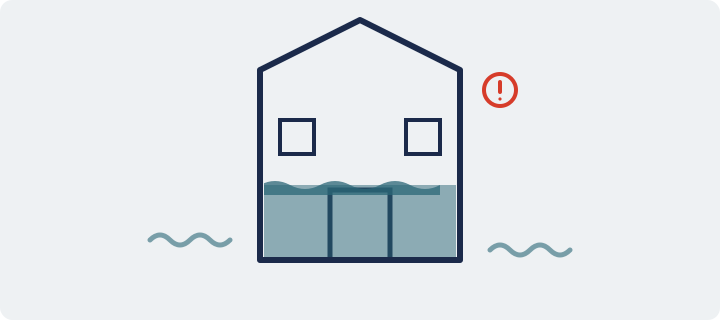
Short answer: it depends on what caused the water, and a lot of homeowners find that out the hard way, standing in two inches of water at 2 a.m. wondering if they're about to eat a $9,000 bill alone.
Here's the actual breakdown.
What's usually covered
Standard homeowners insurance in Ohio typically covers water damage that's sudden and internal — a pipe that bursts, a water heater that fails, a washing machine hose that lets go. The logic insurers use is simple: if the water came from inside your home's own plumbing or appliances, and it happened suddenly rather than over months, it's usually a covered peril under the "sudden and accidental" clause most policies include.
So if a supply line snaps behind your washer and floods the basement overnight, you're likely covered, minus your deductible.
What's usually NOT covered
This is where people get burned. Two big categories almost always fall outside a standard policy:
Flooding from outside the home. Heavy rain, a swollen creek, snowmelt overwhelming your yard's drainage — none of that is covered by a regular homeowners policy. That's what flood insurance through the National Flood Insurance Program (NFIP) is for, and most Ohio homeowners don't carry it unless they're in a mapped flood zone.
Gradual damage. If your basement's been slowly seeping water for months and you only noticed when the smell got bad, insurers will often deny the claim. Their reasoning: gradual damage is considered a maintenance issue, not a sudden loss, and maintenance is on you.
Sewer backup, oddly enough, sits in its own category. It's usually excluded by default, but most Ohio insurers sell it as a cheap add-on, often $50 to $100 a year for meaningful coverage. If you don't already have this rider and you've got older sewer lines or live somewhere prone to backups, it's worth calling your agent about before the next storm, not after.
What actually determines your answer
Three things decide whether your specific situation is covered:
- Where the water came from (inside plumbing vs. outside flooding vs. sewer)
- How fast it happened (sudden failure vs. slow seep)
- What riders you already have on your policy (flood insurance, sewer backup coverage)
If you're not sure which bucket your situation falls into, your insurance agent can tell you in about five minutes on the phone. Worth doing that call before you start any cleanup, since some insurers want documentation of the damage before repairs begin.
What to do in the meantime
Water damage doesn't wait for insurance paperwork to catch up. Mold can start growing within 24 to 48 hours in a wet basement, and the longer standing water sits, the more it spreads into drywall, subflooring, and anything else it touches.
What Flood Insurance Actually Covers in a Basement
If you do carry flood insurance through the National Flood Insurance Program (NFIP), it's worth knowing that basement coverage is more limited than most people assume, flooded basement or not. Per FEMA's NFIP guidance, a standard flood policy covers structural elements in a basement — the foundation, framing, and essential systems like your furnace, water heater, and electrical panel — but finished basement improvements such as drywall, flooring, and paneling are generally excluded, along with most personal belongings stored there. This catches a lot of homeowners off guard after a real flood event: the policy pays to rebuild the bones of the basement, not the finished room you actually used.
This is also why the "sudden and accidental" distinction matters so much for a standard homeowners policy — it determines whether you're even looking at your homeowners insurer at all, or whether you need a completely separate flood policy with its own rules, its own deductible, and its own much narrower basement coverage.
The 30-Day Wait — Why You Can't Buy Flood Insurance the Day It Starts Raining
One detail that surprises people after the fact: NFIP flood policies typically have a 30-day waiting period before coverage takes effect. You can't watch the forecast, buy a policy Tuesday, and be covered for Thursday's storm. If you live somewhere with real flood exposure — near a river, in a low-lying area, anywhere with a history of water finding its way in from outside — this is a decision to make well before storm season, not during it.
Ohio-specific Flood Risk Patterns
Ohio's flood risk isn't evenly distributed. River communities along the Maumee, the Great Miami, the Muskingum, and the Mahoning see genuine seasonal flood risk, particularly during spring snowmelt combined with rain. But flash flooding from overwhelmed storm drains and combined sewer systems can affect homes well outside any officially mapped flood zone — a heavy summer thunderstorm dumping several inches of rain in an hour can overwhelm a city's drainage capacity regardless of whether that address sits in a FEMA flood zone. This is part of why "I'm not in a flood zone" isn't the same question as "could water from outside get into my basement."
If Your Claim Gets Denied
If your insurer denies a basement water damage claim and you believe the cause actually falls under sudden, internal water damage rather than flooding or gradual seepage, you have real options beyond accepting the denial. Ohio insurers are held to specific standards under Ohio Administrative Code 3901-1-54, which governs unfair claims settlement practices — including requirements around timely, good-faith investigation of claims. If you believe your claim was handled unfairly, the Ohio Department of Insurance accepts consumer complaints against insurers directly, and its consumer hotline can walk you through the process.
If you're dealing with a flooded basement right now in Ohio, ClearFlow Restoration connects you with licensed, IICRC-certified crews who can start extraction and drying immediately — and most work directly with your insurance company on the claim, so you're not stuck figuring out documentation alone while your basement sits underwater.
📞 Call (419) 588-0112