
The water is gone, the floor looks dry, and it's tempting to call the job done. That's usually the moment structural drying either happens properly or doesn't happen at all — and skipping it is how a one-week problem becomes a six-month one.
It's Not Just About What You Can See
Standing water is the obvious problem. Structural drying deals with the water you can't see: moisture that's already worked its way into drywall, subflooring, wall cavities, and framing. A surface can look completely dry to the eye while the material underneath is still saturated — and that hidden moisture is exactly what feeds mold growth over the following days and weeks.
How It Actually Works
Professional structural drying isn't just "point some fans at it." It typically involves:
- Moisture mapping — using moisture meters and sometimes thermal imaging to find exactly where water has traveled inside walls and floors, not just where it's visible
- Air movers — positioned specifically to move air across wet surfaces at the right angle and volume, not just blow air around the room
- Industrial dehumidification — pulling moisture out of the air itself, since wet materials can't fully dry into already-humid air
- Ongoing monitoring — re-checking moisture levels over several days, because drying isn't a one-visit job; it's a process that gets tracked until materials reach a safe moisture level
Why the Timeline Matters
A properly monitored structural drying process typically takes 3 to 5 days for a contained area, sometimes longer for larger or more saturated spaces. That might sound slow compared to "the carpet feels dry after a day," but rushing this step is exactly how mold problems start. Mold doesn't need standing water — it just needs trapped moisture and time, and drywall or subfloor that looks dry on the surface can still be harboring enough moisture underneath to get mold growing within 24 to 48 hours.
What Happens If You Skip It
Skipping proper structural drying — or stopping too early because things "look" dry — is one of the most common reasons a water damage situation turns into a mold situation. At that point, what could have been a straightforward drying job becomes a mold remediation job layered on top of it, which costs more and takes longer than doing it right the first time.
How to Know It's Been Done Properly
A restoration crew doing this correctly should be able to show you actual moisture readings, not just tell you it's dry. Ask to see the numbers, and ask what moisture level they're drying to — there's an actual target, not a guess.
The Four Classes of Water Damage, and Why They Change the Drying Plan
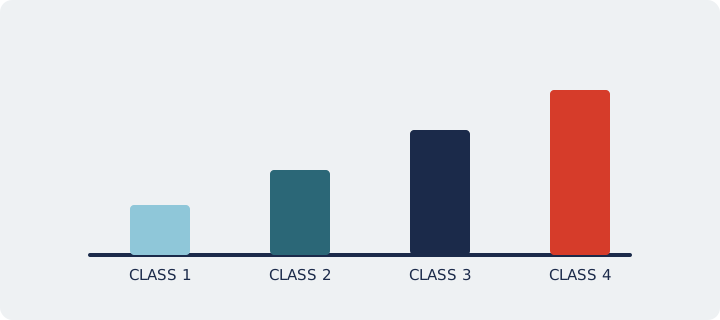
Alongside water category (how contaminated the water is), the IICRC S500 standard also classifies jobs by "class," which measures how much moisture has been absorbed and how difficult the space will be to dry. Class 1 involves minimal absorption — a small area, low-porosity materials. Class 4 involves specialty drying situations: water that's deeply penetrated low-permeance materials like hardwood, plaster, brick, or concrete, which release moisture much more slowly than drywall or carpet padding. A Class 4 situation can require significantly longer drying times and different equipment than a Class 1 or 2 job of the same square footage, which is part of why two jobs that look similar on the surface can have very different timelines.
What "Moisture Mapping" Actually Looks Like
A properly equipped crew uses penetrating and non-penetrating moisture meters to test materials directly, along with thermal imaging cameras in many cases, which reveal temperature differences that often correspond to moisture presence behind walls and under flooring without needing to cut into anything. This process typically happens on the first visit, before any equipment is set up, because it determines the actual scope of drying needed — not just the visibly wet areas, but everywhere moisture actually traveled.
Why Rushing the Timeline Backfires
It's a common instinct to want drying equipment removed as soon as surfaces feel dry to the touch, especially once the noise and disruption of air movers and dehumidifiers running continuously starts to wear on a household. But materials release moisture at different rates, and a wall that feels dry on the surface can still be releasing moisture from deeper layers for days. Ending the process early based on how things feel, rather than on actual moisture readings reaching a safe target, is one of the most common reasons a water damage job turns into a mold remediation job a few weeks later.
What "Dry" Actually Means, Numerically
A material is considered structurally dry when its moisture content returns to a level consistent with the unaffected areas of the same building — sometimes called the "dry standard." This is a specific, measurable target, not a subjective judgment, and a professional crew should be able to tell you both the target number for your specific materials and the actual readings as the job progresses, rather than just declaring the job finished.
If you're in the middle of a water damage situation and want the drying done right the first time, ClearFlow Restoration's dispatch line connects you to licensed, IICRC-certified crews 24/7.
📞 Call (419) 588-0112